Embedding Stream into Your Webpage Using the E3DS Frontend SDK
This guide explains how to embed a Pixel Streaming session directly into your webpage using the Eagle 3D Streaming Frontend SDK.
The steps are straightforward and designed to help you complete the integration quickly and reliably.

Why Use the Frontend SDK?
The E3DS SDK provides a secure and optimized integration layer for embedding your Unreal Pixel Streaming applications into any website.
It manages:
Secure token generation
Authentication
Connection handling
Stream initialization
Modern, production-ready embed workflow
This removes the need to manually handle browser scripts or low-level streaming logic.
Follow the steps below:
Step 1. Download the Frontend SDK
Download the SDK package from the GitHub: Get SDK from GitHub
Step 2. Extract the SDK
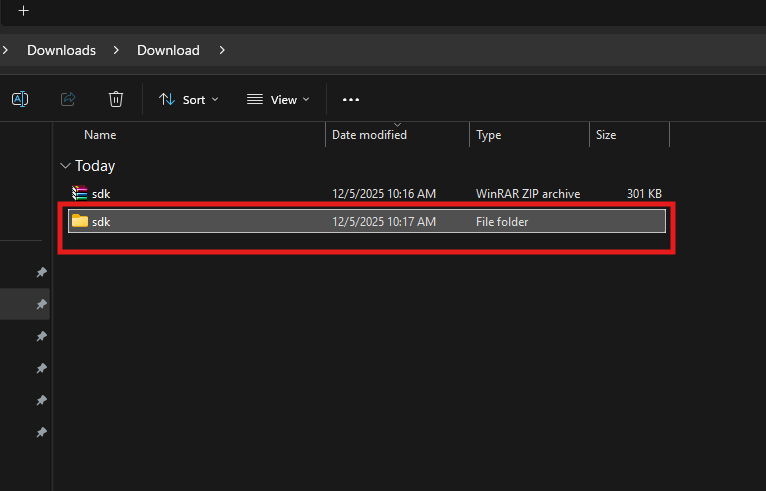
Figure 1. Extracted ZIP File
Step 3. Open the Project in Your Editor
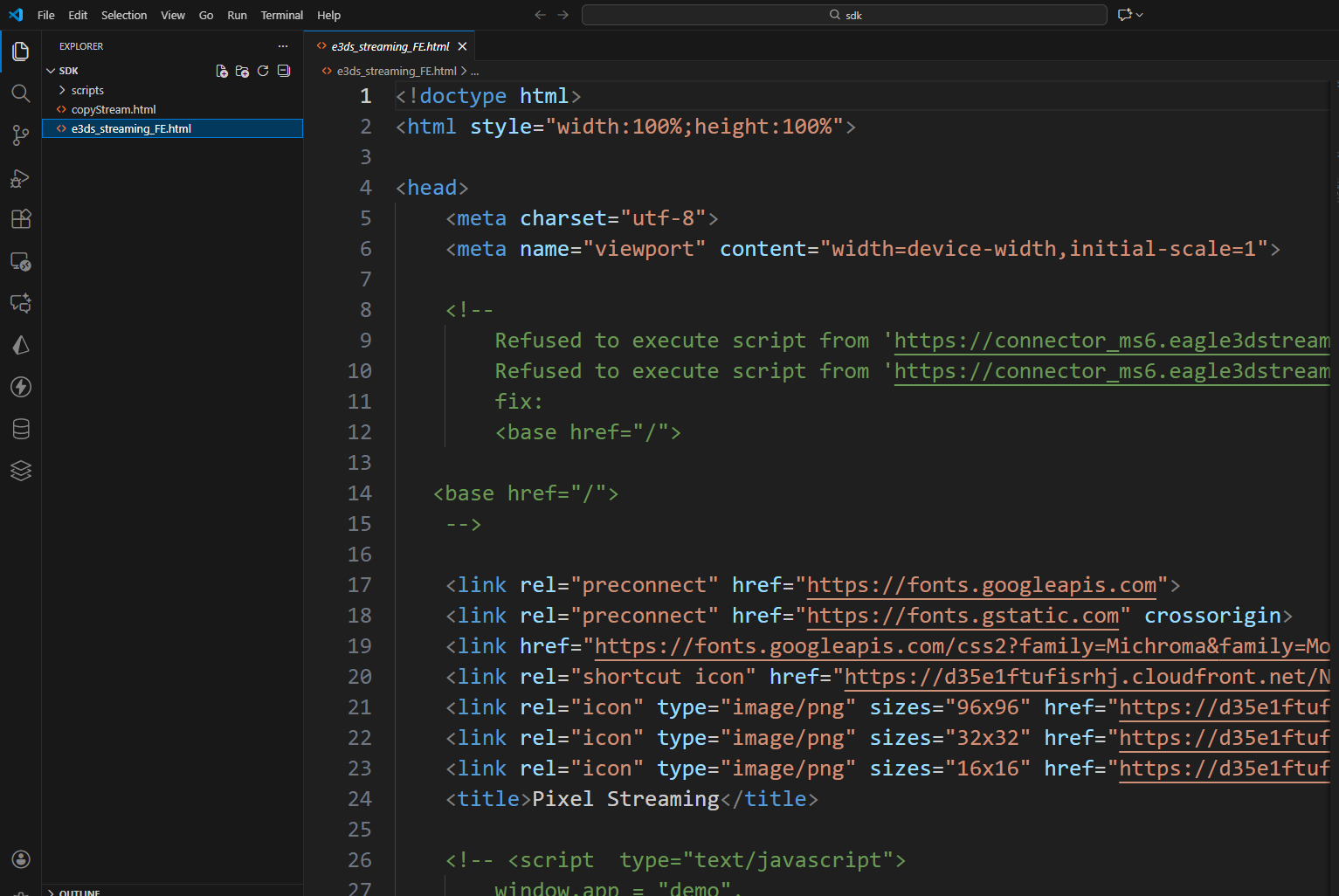
Figure 2. Opening the Project in Editor
Step 4. Open tokenManager.js
Locate and open the tokenManager.js file inside the project.
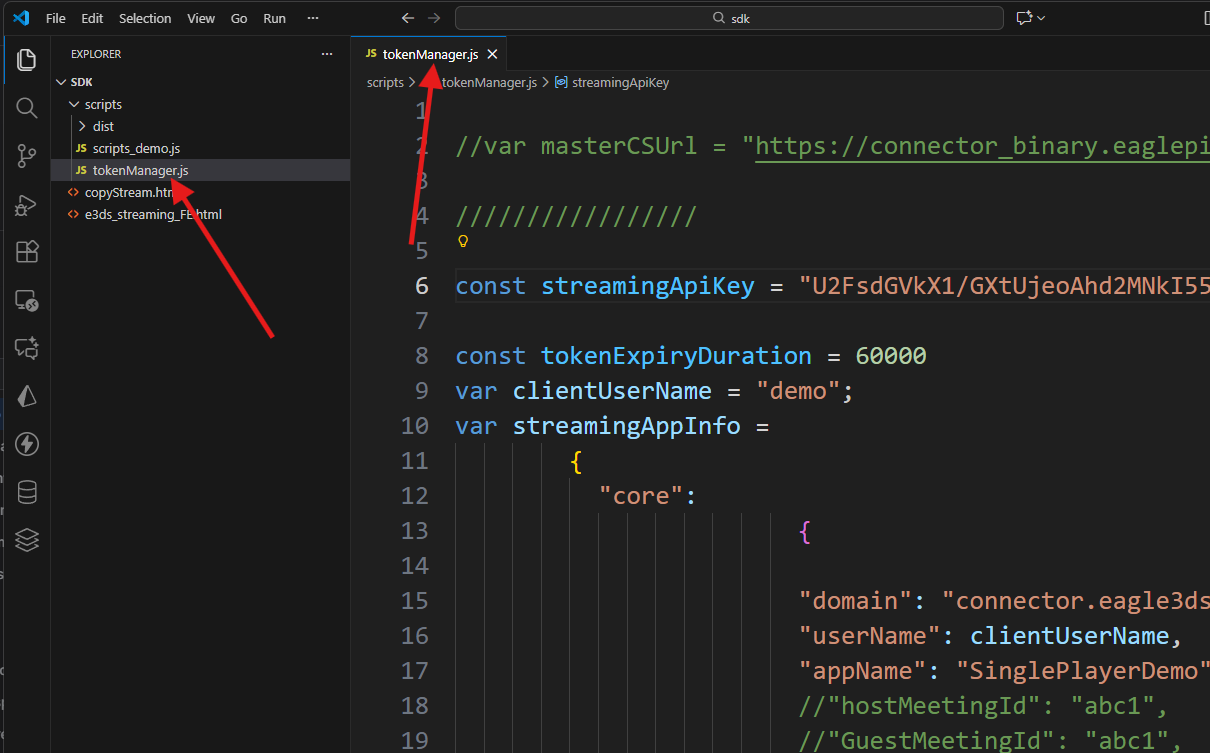
Figure 3. Open tokenManager.js
Step 5. Configure Authentication Details
Update the following values in tokenManager.js:
streamingApiKey → Your Streaming API Key (refers to Streaming API Key doc)
clientUserName → Your Username on the Eagle 3D Streaming Platform
tokenExpiryDuration → Define the token validity duration

Note: There are two types of API keys. Ensure you are using the Streaming API Key.
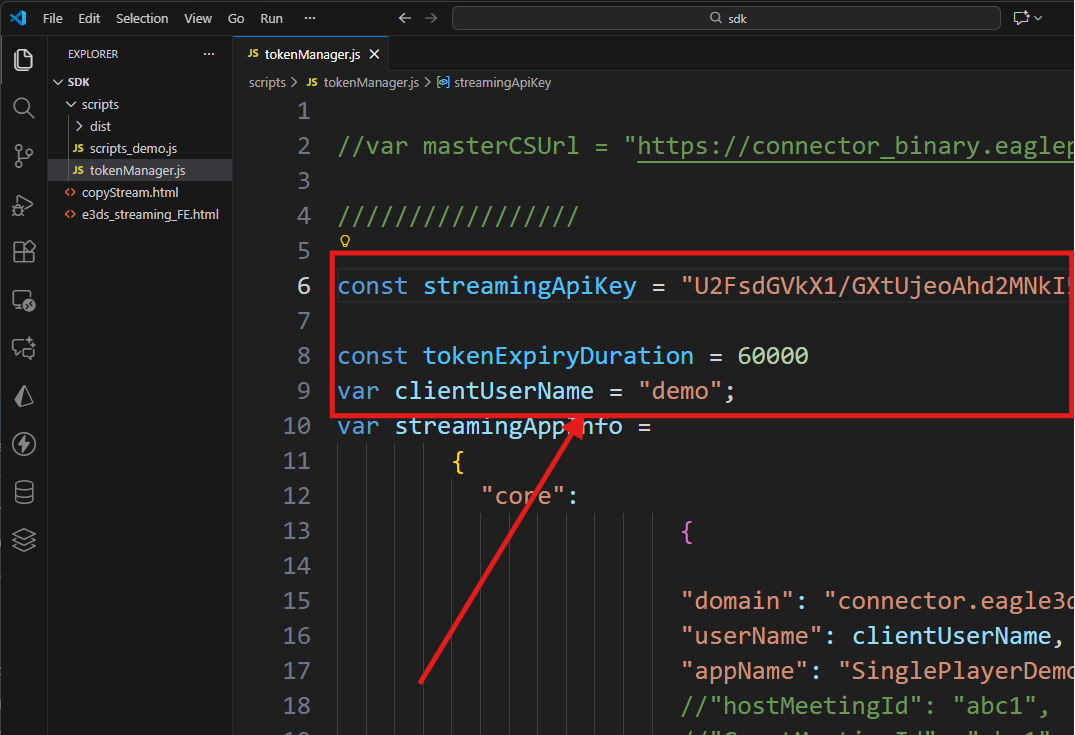
Figure 4. Updating API Key and Username
Step 6. Update Required Streaming Information
Inside the configuration file, update the following fields:
domain →
connector.eagle3dstreaming.com
Note: If you are using a customized system, please replace this with your custom domain.appName → Name of the app you want to embed
configurationName → Configuration name for the app
version →
latest(recommended to use the latest build)
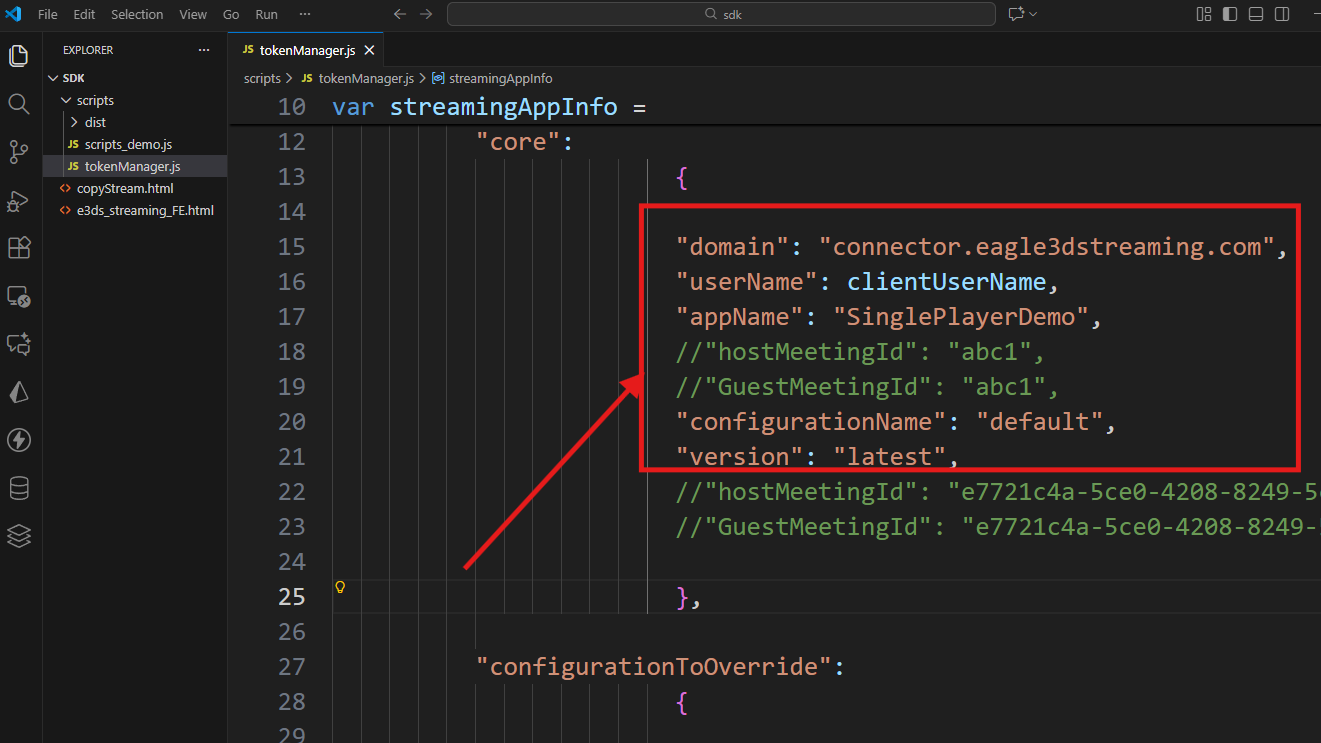
Figure 5. Updating Stream Configuration
Step 7. Run the SDK Locally
Open the file:
e3ds_streaming_FE.htmlRun it via a live server (VS Code Live Server, or any local web server).
This will load the hosted streaming experience using your provided configuration.
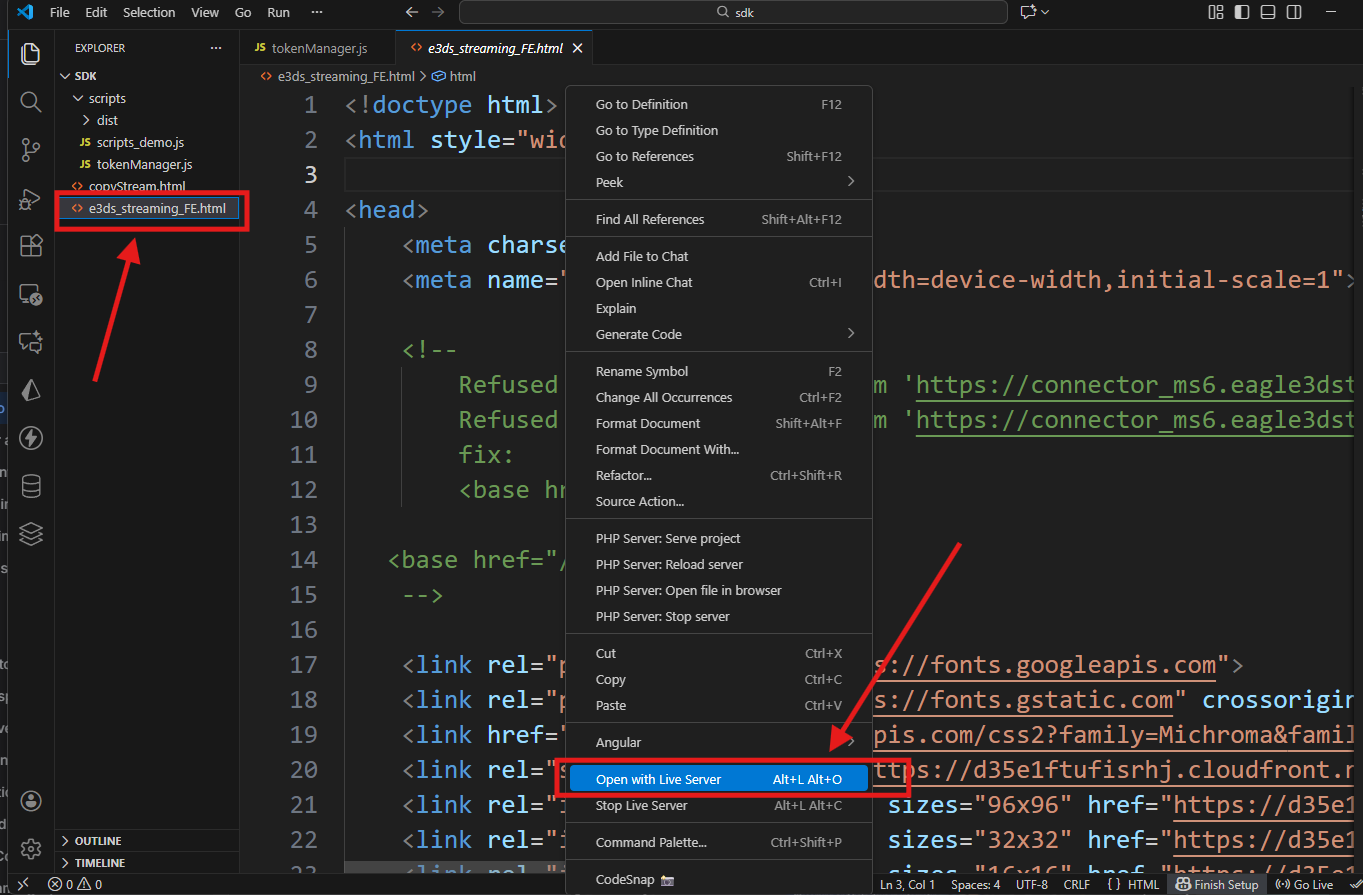
Figure 6. Running the Frontend Locally
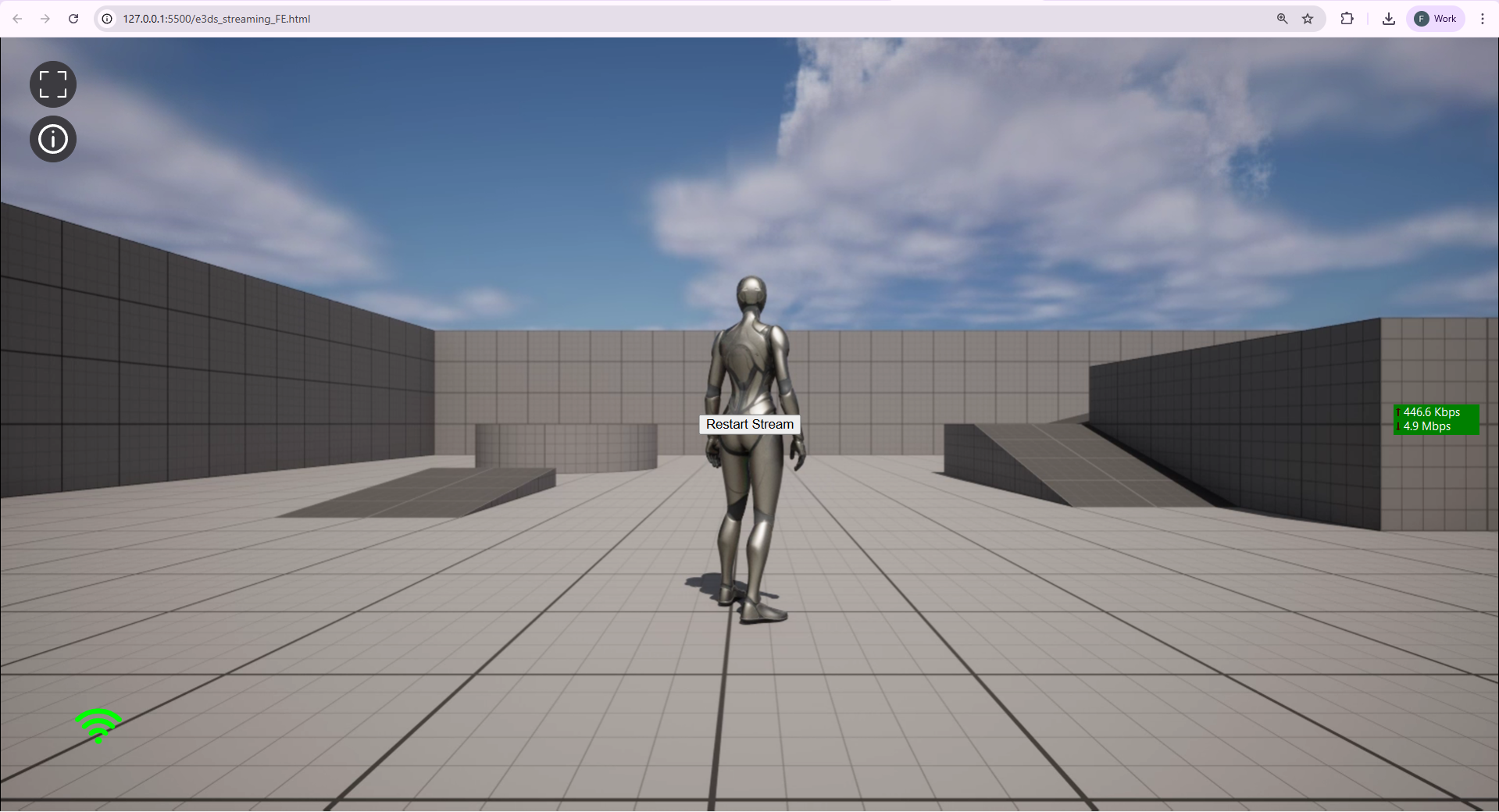
Figure 7. Running the Frontend Locally
Notes
This guide demonstrates the simplest approach to setting up the E3DS Frontend SDK and embedding a stream into a webpage. Once the configuration is complete, you can integrate the SDK into your existing project structure and host your webpage on your preferred hosting environment—whether on your company server, cloud hosting, or any modern web hosting platform.
To explore additional SDK capabilities, such as event callbacks, UI customization, stream lifecycle control, reconnection logic, and advanced embed behaviors, please refer to the detailed guide below:
Runtime Events & Utility Functions
Advanced Features & SDK Behavior
It is recommended to review these document after completing the basic integration steps to fully leverage the Frontend SDK.
Troubleshooting
Issue | Possible Cause | Solution |
|---|---|---|
Token not generated / Authentication fails | Wrong API key, wrong username, or invalid token duration | Use Streaming API Key, verify username, check tokenExpiryDuration, remove extra spaces/quotes |
Stream not loading | Incorrect domain/app/config names | Set domain to |
Black screen / Stuck on connecting | Network or browser blocking WebRTC | Try another network, disable VPN, use Chrome/Edge/Firefox |
Local page not working | Opened using file path ( | Run using Live Server or any local server tool |
Console errors | CORS issues, missing values, wrong API key, incorrect version | Open DevTools → Console; fix the specific error shown |
App not responding or inactive | App not deployed or not ready in the Control Panel | Confirm the app is uploaded & shown in the Control Panel |
Need help?
🛠️ Contact our Support Team
💬 Join the Community on Discord
Follow us on:
Facebook | GitHub | LinkedIn | YouTube